Water extraction in Valley Village: getting water out of the floor
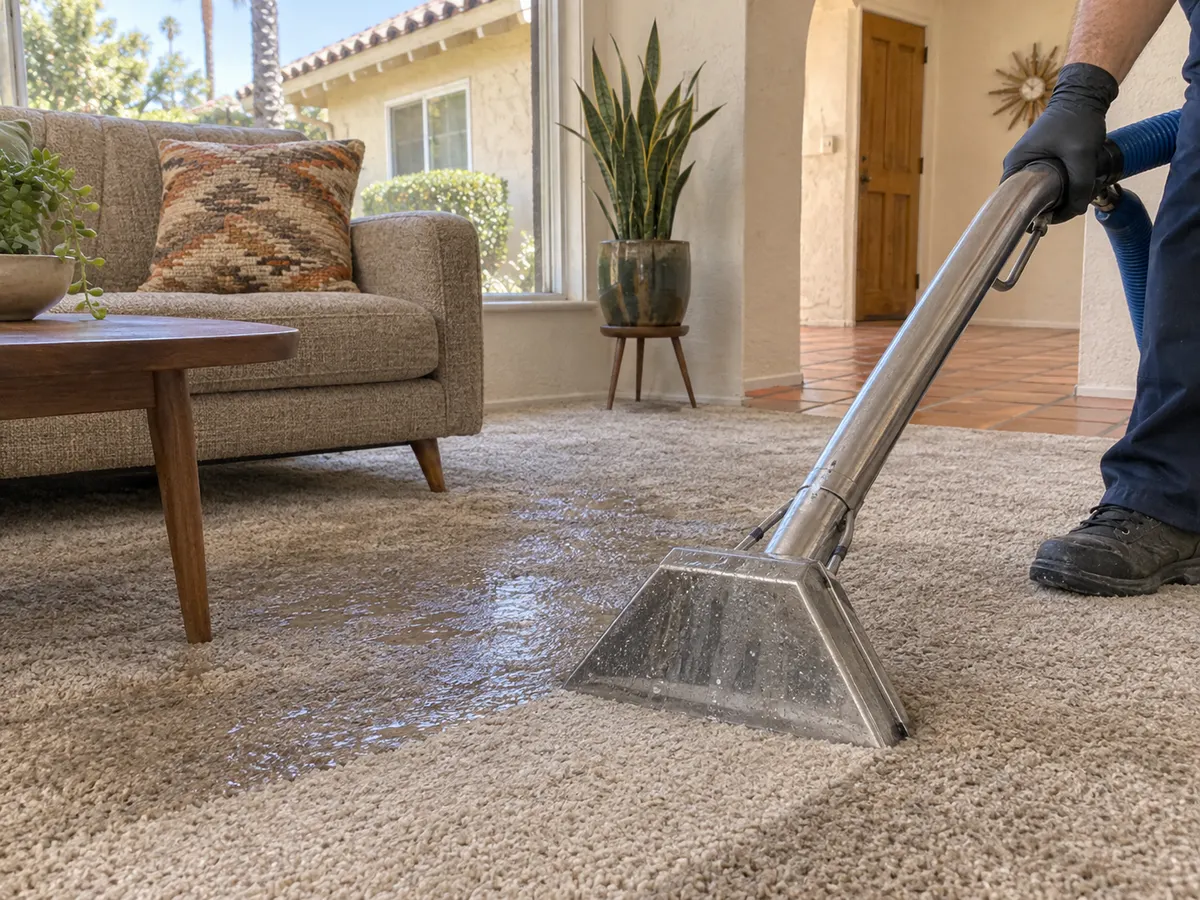
Extraction is the muscle part of a Valley Village water job. Portable or truck-mounted machines draw water up and out of carpet, pad, tile and plank so the drying equipment is not left fighting a soaked floor. It normally happens on day one, once the leak is off.
Pad holds water like a kitchen sponge, so it is usually pulled and tossed after extraction. If the water was clean, the carpet on top can often be floated and dried in place. Anything that stays should hit dry within 24 to 48 hours under EPA guidance[EPA].
Step by step
- Leak off. Main or fixture valve closed.
- Extract. Passes over carpet, pad and hard floors until little comes up.
- Pull wet pad. So the floor below can dry.
- Measure. Readings until the floor is dry.
Do
- Stay off the wet carpet as much as you can.
- Lift area rugs and loose items off the floor.
Avoid
- Leaving a soaked rug rolled up in the corner.
- Shutting the house and cranking the heat to dry things.
Water damage room by room
- Kitchens. Dishwasher, sink and ice maker leaks run under the cabinets. Toe kicks often come off so air can reach the floor underneath, and cabinet backs are checked with a meter.
- Bathrooms. Toilet overflows, tub drains and shower valves wet the subfloor and the wall behind the fixture. A toilet overflow from the bowl is treated by its source, and a backup through the drain is Category 3[IICRC 2026 position statement].
- Laundry rooms. Burst washer hoses release a lot of water fast, and it usually reaches the next room under the wall. Drain backups bring gray water.
- Garages and water heater closets. A leaking tank spreads across the garage slab and under the wall into the house. Stored boxes on the floor soak up water and should be moved first.
- Bedrooms and living areas. Carpet and pad hold a lot of water. Extraction comes first, then the pad is checked; soaked pad is usually replaced rather than dried.
- Ceilings. Roof leaks and AC overflows wet insulation and drywall above. Wet ceilings can sag, so the area under them is kept clear.
From wet floor to dry house: the restoration sequence in Valley Village
Whether the source was a cracked toilet line or a storm that came under the slider, a Valley Village restoration job is worked in roughly this order.
- Find the edges of the water. The leak gets confirmed off first. Then a meter goes along baseboards, cabinet toe kicks and ceilings to mark where wet ends and dry begins.
- Get the bulk water out. Pumps first if water is standing, then extractors on carpet and hard floors. Every gallon pulled out now is a gallon the dehumidifiers do not have to remove.
- Pull what will not dry in time. Pad, swollen baseboard, the bottom of soaked drywall and wet insulation are cut out when they cannot be dried. EPA flood guidance says to throw out wet materials that cannot be fully cleaned and dried within 24 to 48 hours[EPA flood cleanup guide].
- Run the drying setup. The room is closed up with air movers and dehumidifiers working together, aiming for relative humidity under 60 percent and, ideally, between 30 and 50 percent[EPA].
- Clean and disinfect. Hard surfaces that dirty water touched are washed and disinfected. Per the CDC, porous things that cannot be disinfected, like rugs, cloth, wall coverings and drywall, go out[CDC].
- Prove it is dry. A dry-feeling surface is not the finish line. The crew compares readings to a dry reference spot in the house and writes them down.
Sorting water by contamination in Valley Village
Contamination is graded in three steps under the IICRC standard. Sewage, waste line backflow from past the trap, seawater, rising rivers or streams and contaminated wind-driven rain are its examples of Category 3[IICRC 2026 position statement].
For dirty water the order flips: removal and cleaning under contamination controls come before any drying, while clean water can be dried right away[IICRC 2026 position statement].
Leave clean water sitting and it may not stay Category 1; the IICRC notes time and temperature can change the category[IICRC 2026 position statement].
Leaks you cannot see in Valley Village homes
A slab gives water nowhere to drain. It travels along the concrete under baseboards, cabinets and plank flooring, so the meter usually finds a wet zone wider than the stain on the surface.
Check the AC before blaming the roof. A condensate line that clogs during a long cooling season lets the pan fill and spill, and the EPA notes standing pan water can get into the HVAC system itself[EPA]. Clean pans and clear drain lines are the EPA’s fix[EPA].
Places to check:
- Wall cavities where pipes drip or sweat[EPA]
- Beneath plank flooring and carpet pad
- The floor behind the fridge and beside the dishwasher
- Around the base of the water heater and washer
- Ceiling insulation and roofing above a roof leak[EPA]
Small clues add up: a musty closet, a baseboard that has puffed out, a ceiling spot that keeps growing, plank flooring that has started to peak, or an LADWP bill that jumped. LADWP also suggests a dye test in the toilet tank to catch silent leaks[LADWP].
Equipment you will see on a Valley Village water job
- Moisture meters. Probes and scanning meters give a number for drywall, studs and subfloor. Those numbers draw the map and show whether drying is moving.
- Infrared cameras. A thermal image shows cool patches that usually mean evaporating water behind a finished surface. A meter reading backs up anything the camera suggests.
- Extractors and pumps. Portable and truck-mounted extractors draw water out of carpet and pad. When water is deep, a submersible pump goes in first.
- Air movers. Low, fast fans aimed along walls and floors speed evaporation off wet materials.
- Dehumidifiers. Refrigerant units and desiccant units take the evaporated water out of the room air instead of letting it settle back into drywall.
- Wall cavity drying. Pulling baseboard or drilling small holes behind it sends dry air into the wall, which can save the drywall from a full tear-out.
Earthquake water damage in the Valley
On January 17, 1994, the magnitude 6.7 Northridge earthquake hit on a blind thrust fault under the San Fernando Valley[USGS]. The USGS puts property damage at about 40 billion dollars, with more than 7,000 people injured[USGS].
The USGS notes that strong shaking can topple water heaters and break water mains[USGS]. California law requires all residential water heaters to be braced, anchored or strapped to resist falling or moving in an earthquake[California Health and Safety Code 19211], and the Division of the State Architect calls for at least two sets of straps on a typical tank[California DSA].
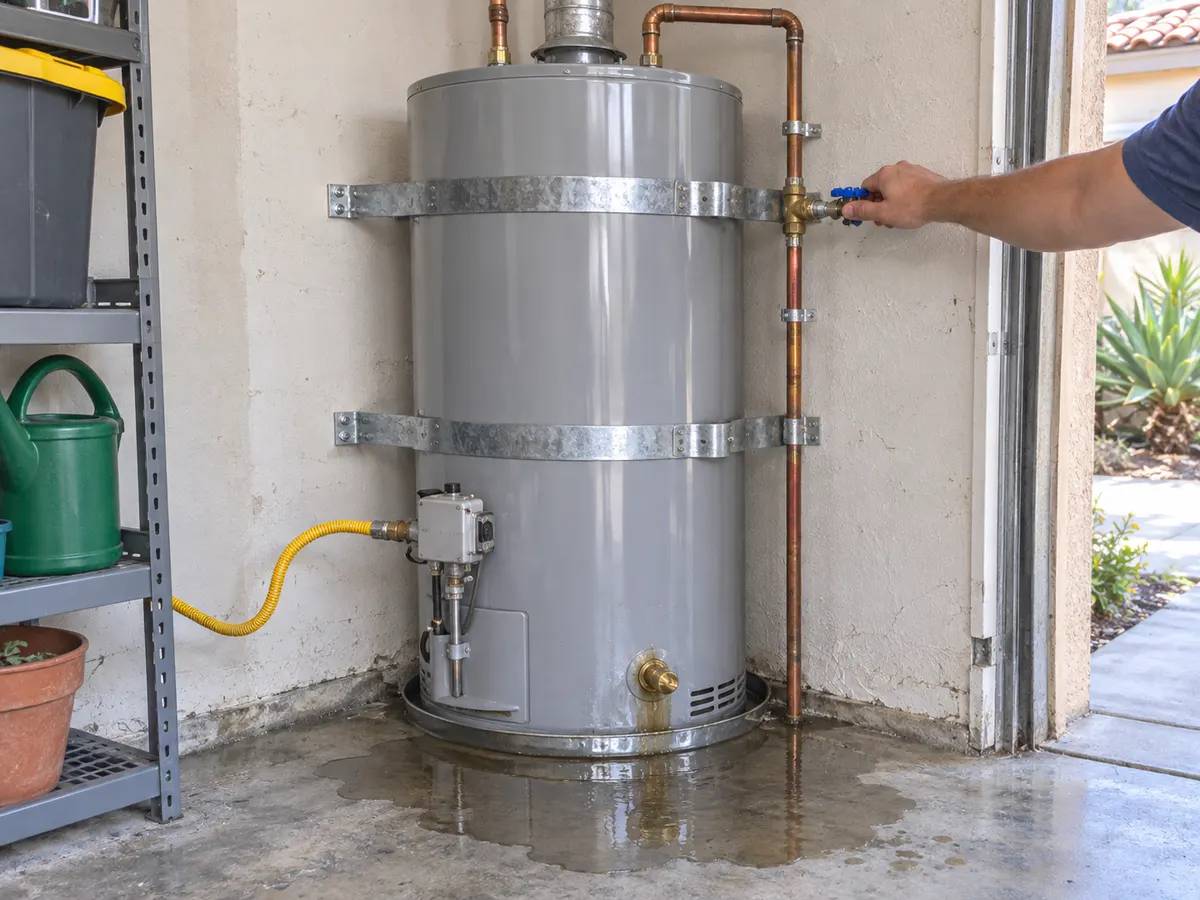
Once the shaking stops and it is safe to move around, look for running water at the water heater, toilets and sink lines, and close the main shut-off if anything is leaking.
What to ask before work starts
- Does the source make this a Category 1, 2 or 3 job?
- Could you mark the wet area on a floor plan for me?
- What can stay and dry, and what has to go?
- How many days do you expect drying to run, and how will you know it is done?
- Should a plumber fix the leak before you set up?
- Can I see the written scope before work begins?
A crew that measures first and explains its plan in plain terms is worth hearing out.
Water extraction and Valley Village homes
The Census Bureau counts 14,831 housing units in ZIP code 91607. 28% are detached single-family houses, 67% are in buildings with two or more units, and 30% of occupied homes are owner-occupied[U.S. Census Bureau]. 72% of homes in ZIP code 91607 were built before 1980 and the median year built is 1969[U.S. Census Bureau]. At that age, original galvanized or copper supply lines, cast-iron drains and older shut-off valves deserve a look.
Valley Village is part of the City of Los Angeles, so water comes from LADWP. Leaks at the street, the meter or a broken main are reported to LADWP at 1-800-DIAL-DWP (1-800-342-5397), where representatives answer outage and water trouble calls around the clock[LADWP].
Other services in Valley Village
- Water damage restoration in Valley Village
- Flood restoration
- Burst pipe water damage
- Crawl space water removal