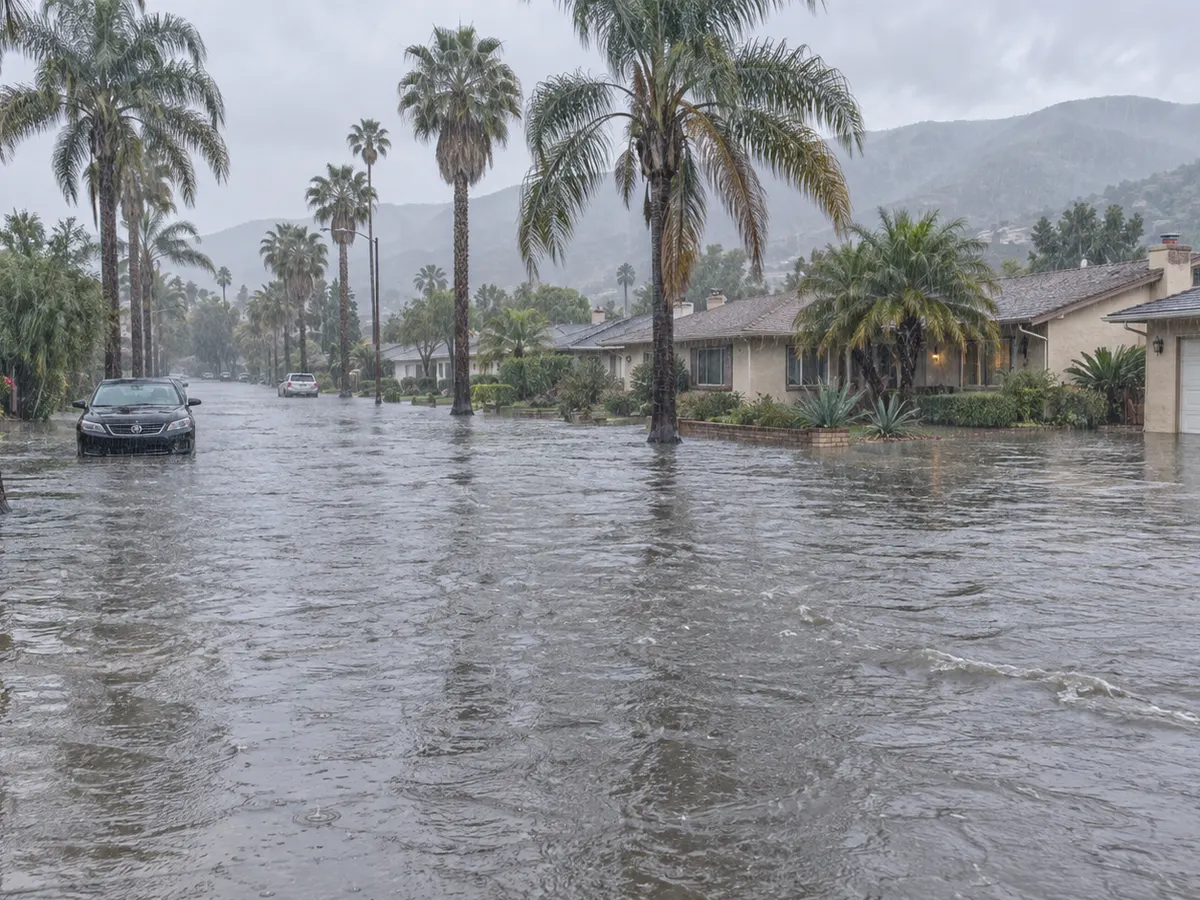
Restoring a home after storm water in Sun Valley
Under the IICRC’s 2026 statement, rising water from rivers or streams is a Category 3 example, and storm water is classified case by case after inspection[IICRC 2026 position statement]. The plan starts from that call.
FEMA’s guidance is to document the damage, stay away from wet electrical equipment, and take out wet drywall and insulation[FEMA]. Work in Sun Valley follows that order: safety, photos, removal, cleaning, drying.
How the job usually runs
- Wait for safe entry. Do not go back in until officials say it is safe[FEMA].
- Document. Photos and video of every room.
- Remove. Wet drywall, insulation and flooring come out.
- Clean and dry. Surfaces cleaned, then dried to verified readings.
Do
- Wear rubber boots and gloves[CDC].
- Keep children and pets out of flooded rooms.
Signs you need water damage restoration, not just a mop
- Baseboards or door casings are swelling
- Vinyl plank or laminate is lifting or cupping
- Stains are spreading on a ceiling or wall
- Water reached cabinets, closets or a hallway
- A drain or toilet backed up
- A damp smell stays after the floor feels dry
Any of these usually means water has moved into materials you cannot dry with towels and a fan. A moisture meter will show how far it went.
How restoration crews in Sun Valley classify water
The IICRC splits water into three categories. Its examples of grossly contaminated Category 3 water include sewage, waste line backflows from beyond a trap, seawater flooding, rising rivers or streams and contaminated wind-driven rain[IICRC 2026 position statement].
The category decides the order of work. Category 1 drying can start right away, while Category 2 and 3 losses get cleaned up under contamination controls before drying begins[IICRC 2026 position statement]. Storm water is not automatically Category 3; the restorer decides after inspecting[IICRC 2026 position statement].
Time matters too. The IICRC notes that time and temperature can change the category[IICRC 2026 position statement], so a clean leak left sitting for days can be treated as contaminated water.
What is under the floor matters
Los Angeles City Planning’s history of postwar tract housing notes that these houses often have concrete slab floors rather than raised floors with wood joists[LA City Planning]. Much of the Valley was built in that era, so on many calls the water is on or under a slab.
Older houses are more likely to be raised. The state’s Earthquake Brace + Bolt program, which helps owners retrofit houses on raised foundations, ranks ZIP codes partly by the share of houses built before 1940[Earthquake Brace + Bolt]. In a raised-floor house, a leak can drip through the subfloor into the crawl space and stay hidden.
Either way, the drying plan changes: slab jobs focus on flooring, baseboards and the bottom of walls, while raised-floor jobs add the subfloor, joists and crawl space.
Water removal and drying equipment used in Sun Valley
- Moisture meters. Pin and pinless meters read moisture in drywall, wood and subfloor so the crew can map the wet area and track progress.
- Thermal cameras. Infrared cameras show temperature differences that often point to wet areas behind walls and under floors. Readings are confirmed with a meter.
- Extraction units. Truck-mounted and portable extractors pull water from carpet and pad; submersible pumps handle deeper water.
- Air movers. High-velocity fans move air across wet surfaces so moisture evaporates faster.
- Dehumidifiers. Refrigerant and desiccant dehumidifiers pull that moisture out of the air so it does not soak back into the house.
- Wall cavity drying. Small holes or removed baseboards let air reach the inside of wet walls without tearing out the whole wall.
What can be saved and what usually goes
Two questions decide it: was the water clean, and how fast can the item dry? Wet materials that cannot be cleaned and dried within 24 to 48 hours should be thrown out, according to the EPA[EPA flood cleanup guide]. With floodwater, the CDC says to throw away items that cannot be disinfected, like wall coverings, cloth, rugs and drywall[CDC].
Clean-water losses give you more options. The EPA says drywall, fiberglass insulation and carpet soaked only with clean water can sometimes be dried and kept, but it also suggests considering replacement because they dry slowly[EPA flood cleanup guide].
Take photos and video of damaged items before they are removed[FEMA].
When a drain backs up into the house
A backup from a toilet, tub or floor drain is grossly contaminated water under the IICRC categories[IICRC 2026 position statement]. The area is closed off, contaminated porous materials come out, and surfaces are cleaned before any drying starts.
In the City of Los Angeles, the public sewer main belongs to the city, but the property owner is responsible for the entire sewer lateral, from the building to the street connection. LA Sanitation also says that if any fixture in a home sits lower than the street manhole cover, the property needs a backwater valve, which requires a permit from the Department of Building and Safety[LA Sanitation].
Once the house is dry
Ask for a copy of the final readings and keep them with your damage photos. In the weeks after, watch for a damp smell, new stains or swelling floors. Fix the source for good; the EPA is clear that the water problem must be fixed or it comes back[EPA].
Flood restoration and Sun Valley homes
In ZIP code 91352, 61% of the 13,310 housing units are detached houses and 31% are apartments, condos or other multi-unit homes; owners live in 50% of occupied units[U.S. Census Bureau]. 77% of homes in ZIP code 91352 were built before 1980 and the median year built is 1961[U.S. Census Bureau]. Original supply lines, drain lines and water heater connections in houses that age are common starting points for leaks.
Water service in Sun Valley is LADWP’s. If water is coming up at the meter, the curb or the street, call 1-800-DIAL-DWP (1-800-342-5397); LADWP lists that line for water trouble at any hour[LADWP].
Other services in Sun Valley
- Water damage restoration in Sun Valley
- Emergency water removal
- Water extraction
- Water mitigation
- Water damage cleanup
- Flood cleanup
- Sewage cleanup
- Burst pipe water damage
- Crawl space water removal